

What Happens When You Leave Your Car Wet After Washing?
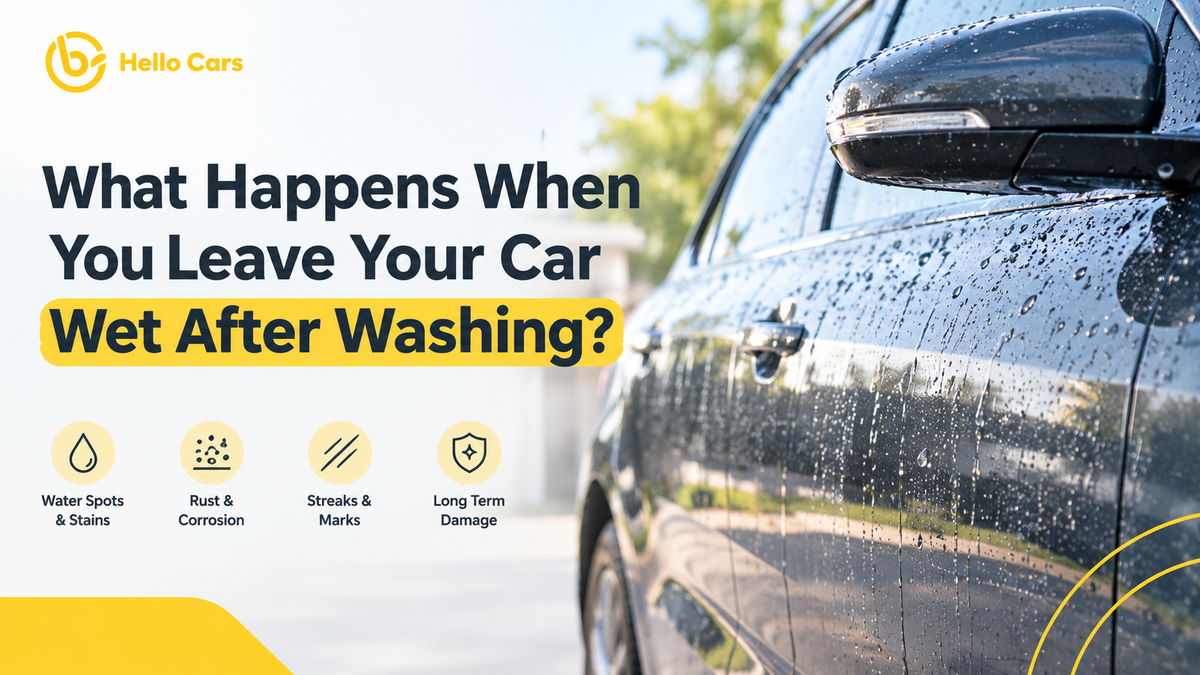
Washing your car is only half of the cleaning process. What you do after the wash can also affect how the paint looks.
Many car owners simply wash the vehicle and leave it to dry on its own. This may seem harmless, especially on a sunny day, but allowing water to remain on the paint can sometimes leave behind visible marks and mineral deposits.
So, is it actually bad to leave your car wet after washing? Not always, but letting the water evaporate naturally can create problems, especially when the water contains minerals or the car is drying under direct sunlight.
Why Does Water Leave Marks on Car Paint?
The water itself usually isn't the main problem. The issue is what remains after the water evaporates.
Water can contain dissolved minerals such as calcium and magnesium. When the water dries, these minerals can remain on the surface of the paint.
You may notice small white spots or cloudy circles, particularly on darker cars. These are commonly known as water spots.
If the same thing happens repeatedly, the deposits can become more difficult to remove.
What Happens When a Wet Car Dries in the Sun?
This is where things can become more noticeable.
If your car is sitting under strong sunlight immediately after washing, the water droplets can evaporate relatively quickly. Each droplet can leave behind whatever minerals or contaminants were dissolved in it.
Instead of seeing a uniformly clean surface, you may end up with dozens of small circular marks.
The effect can be particularly obvious on black, dark blue and other dark-coloured cars because the spots contrast strongly with the paint.
This doesn't mean that every water droplet will damage the paint. The result depends on the water quality, temperature, surface condition and how long the deposits remain there.
Can Water Spots Damage the Paint?
Fresh water spots are usually more of a cosmetic problem.
The bigger concern is when mineral deposits are repeatedly left on the surface and become bonded to the paint. In some cases, contaminants can also become etched into the clear coat.
At that point, a normal wash may not be enough to remove them.
Depending on their severity, they may require a suitable water-spot treatment or, in more stubborn cases, paint correction such as polishing.
Is It Better to Let the Car Dry Naturally?
If you're washing your car with clean, soft water and the vehicle is drying in a suitable environment, air drying may not immediately cause a problem.
But if your water has a high mineral content, allowing the entire car to air dry can increase the chance of water spots.
This is why drying is an important part of proper car washing rather than something you do only for appearance.
Why Drying With a Towel Helps
Using a clean, soft microfiber drying towel can help remove water before it evaporates.
The key word is clean.
If the towel contains trapped dirt or grit from previous use, dragging it across wet paint can create fine scratches or swirl marks. A towel designed for automotive drying is preferable to an old household cloth.
You also don't need to aggressively rub the paint. Gently drying the surface or using a suitable drying technique is enough.
What If You Don't Dry the Car at All?
Leaving the car wet once in a while isn't going to ruin the paint.
The problem comes from making it a regular habit, especially when the car is washed with mineral-rich water and left under the sun.
You may gradually notice more water spots, particularly on the bonnet, roof, windows and other horizontal surfaces where water tends to sit.
Over time, removing these marks can become more difficult than simply drying the car properly after each wash.
Should You Dry Your Car After Rain Too?
Not necessarily every time.
Rainwater can also leave marks as it evaporates because it picks up airborne dust and pollutants. However, you don't need to immediately dry your car every time a few drops of rain fall on it.
The bigger concern is when your car has already accumulated dirt and contaminants, followed by rain and then strong sunlight. Once the water evaporates, residue can remain on the surface.
If the car gets properly washed after the rain, those deposits can usually be dealt with more easily.
Can You Use an Air Blower Instead?
Yes.
An air blower can be useful for removing water from areas where it tends to hide, such as around mirrors, door handles, grilles, badges and panel gaps.
It can also reduce the amount of physical contact with the paint, which can be helpful when trying to minimise the chance of introducing fine scratches during drying.
However, the air source should be clean, and you still need to deal with the water remaining on larger surfaces.
What About Wax or Teflon Coating?
A properly maintained protective layer can make water behaviour on the paint different and may make cleaning easier, but it doesn't mean you can completely ignore drying.
Water can still evaporate and leave mineral deposits.
So whether your car has wax, a coating or just its factory paint, good washing and drying habits still matter.
How Should You Dry Your Car After Washing?
A simple approach works well.
First, try to wash the car away from strong direct sunlight when possible. After rinsing, remove excess water using a clean, soft microfiber drying towel or an appropriate drying aid.
Pay attention to areas where water collects, especially mirrors, handles, grilles and panel gaps.
Most importantly, don't use a dirty towel or aggressively rub the paint to make it dry faster.
Frequently Asked Questions
Is it bad to leave my car wet after washing?
Not necessarily if it happens occasionally. However, regularly allowing water to evaporate from the paint can increase the chance of water spots, especially when the water contains a lot of minerals.
Can water damage car paint?
Water itself doesn't normally damage healthy paint simply by touching it. The concern is the minerals and contaminants left behind when the water evaporates, which can eventually cause stubborn water spots or etching.
Should I dry my car after every wash?
Drying after washing is a good habit, particularly if your water is mineral-rich or the car is drying in direct sunlight.
Can water spots be removed by polishing?
Some stubborn water spots can be improved through polishing, particularly when they have affected the clear coat. However, not every water spot requires polishing, so the condition should be assessed first.
Can I use a normal cotton cloth to dry my car?
It's better to use a clean, soft microfiber towel designed for automotive use. Rough or dirty cloth can increase the risk of fine scratches.
Final Thoughts
Leaving your car wet after washing isn't an instant recipe for paint damage. The real issue is what happens when that water evaporates.
If the water contains minerals, those minerals can remain behind as spots. When this happens repeatedly, what started as a simple cosmetic issue can become harder to remove.
So after washing your car, don't just think "it's clean."
Think about the final step too.
A proper wash removes the dirt. Proper drying helps keep the clean finish looking clean.