

Types of Car Scratches: How to Identify Them and What Can Fix Them
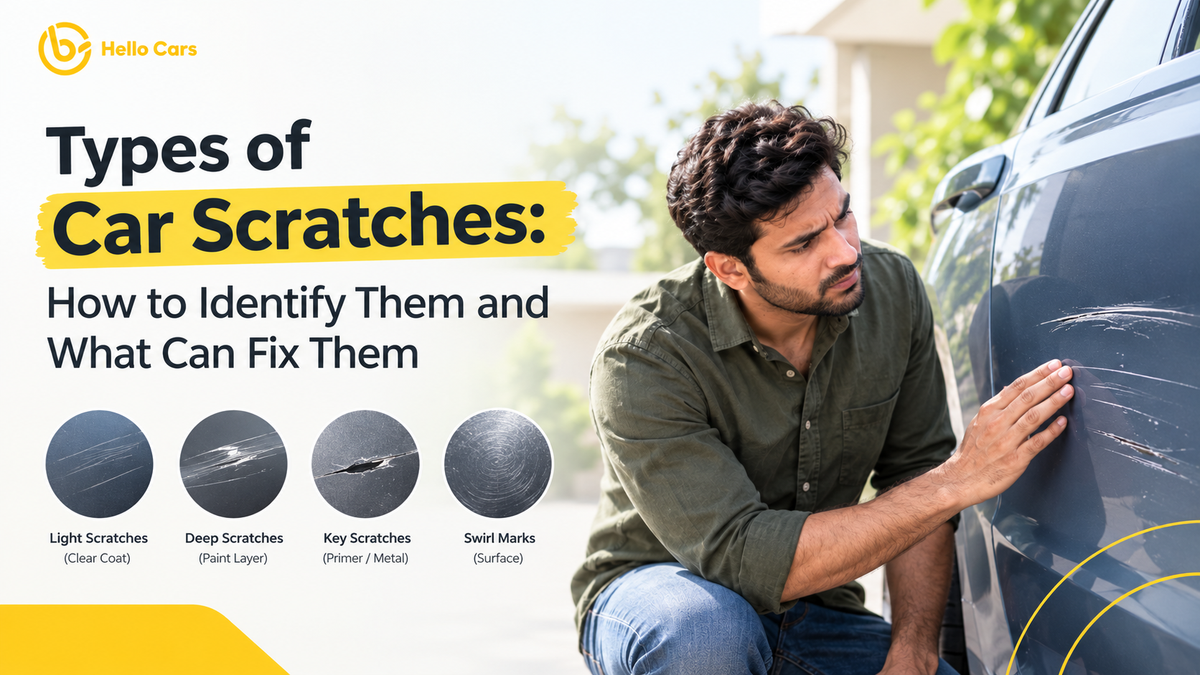
A scratch on your car can be frustrating, especially when the paint was looking perfect just a few days ago. Sometimes, it appears after a quick wash. Other times, you might notice a thin line on the door after parking in a tight space.
But not all car scratches are the same. Some are minor marks on the surface that can be improved with polishing, while others go deep enough to require paint repair.
Knowing what type of scratch you're dealing with can help you choose the right treatment and avoid spending money on repairs you may not need.
1. Clear Coat Scratches
The clear coat is the transparent outer layer that protects your car's coloured paint and gives it a glossy finish. Since this is the layer exposed to everyday contact, it is often where minor scratches appear first.
Clear coat scratches can happen when you wipe dust off the car with a dry cloth, use a dirty washing sponge or accidentally brush against the paint. They may look like fine lines that become more visible under direct sunlight or bright lights.
The good news is that many shallow clear coat scratches can be reduced with proper polishing. However, the result depends on their depth and the condition of the surrounding paint. Deeper marks may remain visible even after treatment.
2. Swirl Marks
Have you ever washed your car and noticed circular patterns appearing on the paint when sunlight hits it? These are commonly called swirl marks.
Despite the name, swirl marks are not necessarily perfect circles. They are usually fine scratches that appear as a web of lines, particularly on dark-coloured cars.
They often develop through repeated contact with dust, dirt and unsuitable cleaning materials. For example, wiping a dusty bonnet without rinsing it first can drag tiny abrasive particles across the surface.
Swirl marks generally affect the clear coat, so professional polishing can often improve their appearance. The best way to prevent them is to rinse the car properly before washing, use clean microfiber materials and avoid wiping dry, dusty paint.
3. Paint-Level Scratches
Paint-level scratches extend beyond the clear coat and reach the coloured base coat underneath. These scratches are usually more noticeable because they interrupt the car's original colour and finish.
They can occur when a car brushes against a wall, comes into contact with a sharp object or gets scraped by another vehicle.
Whether the scratch can be repaired through polishing depends on how much paint has been affected. If the damage is confined to the clear coat, polishing may help. If the coloured base coat itself has been removed, polishing cannot replace the missing paint.
For these scratches, a professional inspection can help determine whether touch-up paint or a more extensive paint repair is necessary.
4. Primer-Level Scratches
Your car's paint system generally includes a primer beneath the coloured base coat, followed by the clear coat on top. A primer-level scratch has passed through the clear coat and base coat to expose the primer.
These scratches may appear lighter or greyish compared with the surrounding paint, although the exact appearance depends on the vehicle's colour and paint system.
At this stage, ordinary polishing is unlikely to solve the problem because the damage is no longer limited to the surface finish. The missing layers need to be restored through an appropriate paint repair.
Leaving the area untreated can also allow further deterioration, particularly if the scratch is exposed to moisture and other contaminants.
5. Deep Scratches That Expose Metal
These are among the more serious types of car scratches. They extend through the paint system and expose the underlying metal panel.
You may notice a sharp line with a metallic appearance, although visual inspection alone cannot always confirm which layer has been exposed.
When bare metal is exposed, moisture can lead to corrosion, particularly if the damage is left untreated. The appropriate repair usually involves preparing the damaged area and restoring the protective paint layers.
Do not try to fix a deep scratch by repeatedly rubbing it with polish. Polishing removes a small amount of surface material; it cannot rebuild missing paint or protect exposed metal on its own.
6. Scuff Marks and Paint Transfer
Not every mark on your car is an actual scratch. Sometimes, what looks like paint damage is a scuff or a layer of material transferred from another surface.
For example, a car that brushes against a painted pillar may pick up colour from the pillar. A light scrape against a plastic object may leave a visible mark without cutting deeply into the original paint.
If the mark is only transferred material, a suitable automotive cleaning product or careful polishing may remove or reduce it. But if the contact has also scratched through your car's clear coat or paint, the damage may need additional treatment.
Avoid using rough pads, abrasive household cleaners or excessive force to remove the mark. These can create further damage while you're trying to clean it.
How Can You Tell How Serious a Scratch Is?
Start by cleaning the affected area gently so that dirt does not make the damage look worse than it is. Examine the scratch in good lighting and look at the colour and appearance of the damaged area.
If it appears as a fine line that is mainly visible under certain lighting, it may be a shallow clear coat scratch. If the scratch has a noticeably different colour or you can see a layer beneath the original paint, the damage may be deeper.
However, appearance alone is not always enough to identify the exact depth. Some scratches look severe because of transferred paint, while others appear small despite reaching deeper layers.
If the scratch exposes primer or metal, or if you are unsure how deep it is, have it assessed before attempting a repair.
Can Car Polishing Remove Every Scratch?
No. This is one of the most common misunderstandings about car polishing.
Polishing works by refining the surface and reducing certain imperfections, especially shallow scratches and swirl marks in the clear coat. It can also improve the overall gloss of the paint.
However, polishing cannot replace paint that has already been removed. If a scratch reaches the base coat, primer or metal, it may require touch-up paint or professional repainting rather than polishing alone.
Rubbing compounds can be more abrasive than finishing polishes, so using a stronger product does not automatically produce a better result. Unnecessary or aggressive paint correction can remove more clear coat than needed.
The right treatment depends on the depth of the scratch, not simply how visible it looks.
How to Prevent Scratches on Your Car
You cannot prevent every scratch, but a few everyday habits can reduce the risk. Always rinse loose dirt off the car before washing, use clean microfiber towels and avoid wiping dusty paint with a dry cloth.
Be careful when parking near walls, pillars, bushes and other vehicles. Even a brief contact can leave a scuff or scratch, especially in narrow parking spaces.
If you notice a new scratch, clean the area gently and assess the damage before applying products. Avoid experimenting with abrasive compounds or household cleaning materials, as they may make the problem worse.
Regular washing also helps remove abrasive dirt and contaminants before they accumulate on the paint. If you have several visible scratches or the finish has lost its gloss, professional car polishing and detailing can help determine which imperfections can be corrected and which need paint repair.
Frequently Asked Questions
Can toothpaste remove car scratches?
Toothpaste is not designed for automotive paint correction. Its abrasiveness varies, and using it may create additional marks or an uneven finish. A suitable automotive product is a better choice.
Can I remove a deep scratch with rubbing and polishing?
Usually not if the scratch has gone through the coloured paint or reached the primer or metal. Rubbing and polishing can improve certain surface imperfections, but they cannot restore missing paint.
Are scratches on a car dangerous?
Most shallow scratches are cosmetic. Deeper scratches that expose the underlying metal deserve more attention because moisture can contribute to corrosion.
Should I repair a small scratch immediately?
A shallow clear coat scratch may not require urgent repair, but scratches that expose primer or bare metal should be assessed promptly. Early repair can help prevent further deterioration.
Does every scratch require repainting?
No. Some marks are simply transferred material, while shallow clear coat scratches may improve with polishing. Repainting is generally considered when the coloured paint or deeper layers have been damaged.
Final Thoughts
Car scratches can range from barely visible surface marks to deep damage that exposes the underlying metal. The important thing is to identify what has actually been damaged before choosing a solution.
A shallow scratch may respond well to polishing, while a deeper one needs a different approach. Using an aggressive compound on every scratch is not the answer, and neither is assuming that every visible mark requires a complete repaint.
If you are unsure about the damage, get the paint inspected before attempting a repair. With the right treatment and careful washing habits, you can maintain your car's finish without putting the paint through unnecessary correction.