

Professional Car Detailing Tools: What Experts Use and Why
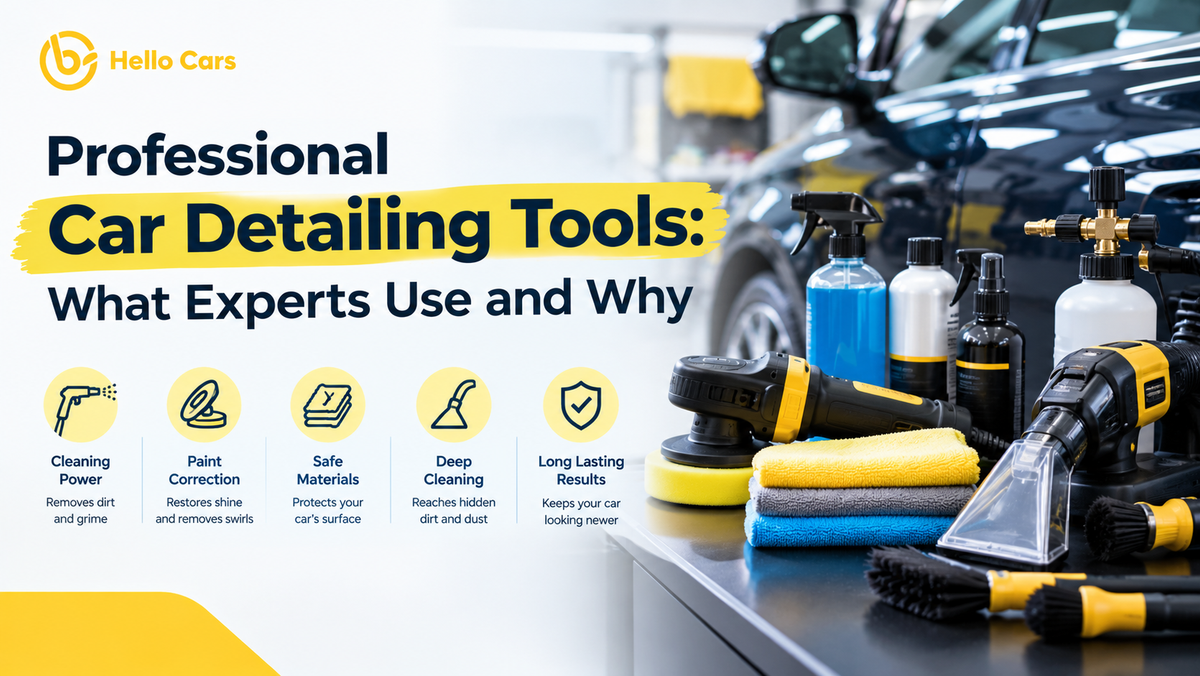
Have you ever wondered why a professionally detailed car can look noticeably different from one that has only been washed at home? The difference isn't always about the cleaning products. The tools used during the process also play an important role.
From pressure washers and foam cannons to polishing machines and interior cleaning equipment, professional car detailers use different tools for different jobs. Each one serves a purpose, whether it is removing loose dirt, cleaning hard-to-reach areas or improving the appearance of the paint.
Understanding these tools helps explain what happens during a professional detailing service and why using the right equipment matters.
1. Pressure Washers for Removing Loose Dirt
A pressure washer is one of the most recognisable tools used in professional car washing and detailing. It delivers water at a controlled pressure, helping remove loose dirt, mud and road grime from the vehicle's exterior.
Before touching the paint with a wash mitt, detailers often rinse the car to remove as much loose contamination as possible. This reduces the amount of dirt that could otherwise be dragged across the surface during washing.
However, more pressure does not automatically mean a better wash. Professionals need to use suitable settings and maintain an appropriate distance, particularly around damaged paint, rubber seals, sensors and delicate trim.
2. Foam Cannons and Foam Sprayers
A foam cannon attaches to compatible pressure-washing equipment and applies a layer of car shampoo across the vehicle. Foam sprayers can also be used with other suitable equipment, depending on the detailing setup.
The foam helps spread the cleaning solution over the surface and can loosen or suspend some dirt before rinsing. This makes it a useful step in the pre-wash process.
However, thick foam does not automatically mean a more effective wash. The result depends on the cleaning solution, the type of contamination and the washing method. Stubborn dirt may still require careful contact washing with a clean mitt.
3. Microfiber Towels and Wash Mitts
Microfiber materials are essential in professional car care because they can lift and hold dirt while being gentle on automotive surfaces when used correctly.
Wash mitts are commonly used to clean the exterior, while microfiber towels help with drying, wiping products and cleaning selected interior surfaces.
Professionals often keep separate towels for different tasks. A towel used on wheels, for example, should not be reused on the bonnet or other painted panels without proper laundering. Wheel areas can contain abrasive brake dust and heavier contamination.
Cleanliness matters just as much as the material itself. Even a good microfiber towel can cause scratches if it contains trapped grit or is used incorrectly.
4. Detailing Brushes for Hard-to-Reach Areas
Not every part of a car can be cleaned effectively with a large wash mitt or cloth. Areas such as air vents, grille openings, emblems, door handles and narrow trim gaps often need smaller tools.
Detailing brushes come in different sizes and stiffness levels to suit different surfaces. Softer brushes can help clean delicate interior trim, while more durable brushes may be suitable for selected wheel and exterior components.
Choosing the right brush is important. A brush that is too stiff can scratch glossy trim, damage sensitive surfaces or leave marks on the finish. Detailers need to consider both the material being cleaned and the type of dirt being removed.
5. Vacuum Cleaners for Interior Detailing
Exterior washing is only one part of car detailing. The interior can collect dust, food crumbs, hair, sand and other debris, particularly around seats, floor mats and under the pedals.
A detailing vacuum cleaner helps remove this loose dirt from carpets, upholstery and other accessible areas. Different attachments make it easier to clean narrow gaps, seat seams and spaces around the centre console.
Some professional setups also use wet-and-dry vacuum cleaners or upholstery extraction machines. These are designed for specific cleaning tasks and should not be confused with ordinary dry vacuuming.
The choice of equipment depends on the interior material and the condition of the vehicle. Leather, fabric, carpets and electronic controls all require different levels of care.
6. Dual-Action Polishers for Improving Paint Finish
A machine polisher is one of the most important tools used during paint correction and professional polishing.
Dual-action polishers combine rotation with an oscillating movement. They are widely used to improve gloss and reduce the appearance of suitable paint defects, including many fine scratches and swirl marks.
The machine works with a polishing pad and a product selected for the condition of the paint. The pad, compound, machine speed and technique all affect the result.
Not every car needs machine polishing. If the paint is already in good condition, an ordinary wash may be sufficient. Unnecessary polishing can remove some of the clear coat, so the surface should be inspected before correction begins.
7. Rotary Polishers for More Demanding Paint Correction
Rotary polishers operate differently from dual-action machines because the pad rotates on a single axis. They can provide strong cutting action, making them useful for certain paint-correction jobs in experienced hands.
However, they require careful control. Incorrect technique, excessive pressure or unsuitable products can cause overheating, holograms and other paint defects.
This is why the choice between a rotary and a dual-action polisher depends on the condition of the paint, the type of defect and the detailer's experience.
A more powerful machine is not automatically the better choice. The aim is to achieve the required correction while preserving as much of the original paint as reasonably possible.
8. Inspection Lights for Finding Paint Defects
Some scratches and swirl marks are difficult to see in ordinary daylight. A car may look glossy from a distance while showing fine imperfections under a different lighting angle.
Professional detailing inspection lights help reveal these defects before and after polishing. They allow detailers to examine the surface more closely and check whether the correction has improved the finish.
These lights are especially useful on dark-coloured vehicles, where swirl marks and polishing haze can become more noticeable under concentrated lighting.
Proper inspection also helps prevent unnecessary polishing. Instead of treating the entire vehicle the same way, a detailer can focus on the areas that actually need attention.
9. Steam Cleaners for Selected Interior Surfaces
Steam cleaners use heated vapour to help loosen certain types of dirt and residue. In car detailing, they may be used on suitable interior surfaces, selected crevices and other areas where the equipment and cleaning method are appropriate.
However, steam is not suitable for every part of a vehicle. Excessive heat or moisture can damage sensitive materials, adhesives, leather finishes, electronic components and certain plastics.
Professionals need to understand which surfaces can tolerate steam and when another cleaning method would be safer. Using specialised equipment is useful only when it is appropriate for the job.
10. Upholstery Extractors for Deep Interior Cleaning
Fabric seats and carpets can hold dirt beyond what ordinary vacuuming can remove. An upholstery extractor is designed to apply a suitable cleaning solution and recover loosened dirt along with moisture.
This can help with deeper cleaning of compatible fabric surfaces, particularly when they contain accumulated grime or certain stains.
The process needs to be controlled carefully. Applying too much water or failing to extract and dry the material properly can leave the interior damp for longer than necessary.
An extractor is therefore different from a standard vacuum cleaner. Each tool handles a different part of the cleaning process.
11. Paint Thickness Gauges for Safer Polishing
Before carrying out more intensive paint correction, some detailers use a paint thickness gauge to measure the coating thickness on a vehicle's panels.
This can provide useful information about the existing finish and help identify areas that may have been repainted. It can also inform decisions about how cautiously to approach polishing.
The readings need to be interpreted correctly. Different vehicles have different paint systems, and some gauges measure certain materials more effectively than others. A single reading does not reveal the complete condition of the paint.
The tool is particularly useful when assessing a vehicle with an uncertain repair history or when planning more demanding correction work.
12. Applicator Pads for Wax and Protective Products
Applicator pads are used to spread suitable products across automotive surfaces. Depending on the material and design, they may be used for applying wax, sealants, dressings or other detailing products.
The goal is to achieve even coverage without introducing unnecessary marks. Different products may require different applicators, so using the right pad and following the product instructions matters.
Applicators should also be kept clean and should not be reused for incompatible products without proper cleaning. Contamination from a previous task can affect the finish or interfere with the application process.
Do All Car Detailing Jobs Require These Tools?
No. The equipment required depends on what the car actually needs.
A routine exterior wash may only require suitable washing equipment, car shampoo, clean microfiber materials and proper drying tools. Interior cleaning may call for a vacuum cleaner and appropriate brushes.
Paint correction is a different job. It may require inspection lights, polishing machines, pads and carefully selected compounds. Deep interior cleaning may call for extraction equipment, while more specialised work can require additional tools.
A professional detailer should select equipment based on the vehicle's condition and the service being performed, rather than using every available tool on every car.
Why Professional Technique Matters More Than Equipment Alone
Having professional equipment does not guarantee a good result. The way it is used makes a considerable difference.
A pressure washer can help remove loose dirt, but unsuitable pressure or technique can damage vulnerable areas. A machine polisher can improve the paint finish, but aggressive correction can remove too much clear coat. Even a soft microfiber towel can cause scratches if it contains grit.
The cleaning products, the condition of the vehicle, the detailer's experience and the order in which the work is performed all contribute to the final result.
This is why professional car detailing involves more than simply buying expensive equipment. It requires knowing which tool to use, where to use it and when a particular treatment is unnecessary.
Frequently Asked Questions
What is the most important tool in car detailing?
There is no single tool that handles every detailing task. Pressure washers help with exterior pre-washing, microfiber materials are important for safe cleaning and drying, and polishers are useful for appropriate paint-correction work.
What is the difference between a foam cannon and a pressure washer?
A pressure washer delivers water under pressure to rinse and remove loose dirt. A foam cannon uses compatible equipment to apply a layer of cleaning solution over the vehicle. They serve different purposes and are often used together.
Do professionals use machine polishers on every car?
No. Machine polishing is generally used when the paint needs correction or improvement. A car with a healthy, well-maintained finish may not need it.
Can I detail my car at home with basic tools?
Yes. You can handle routine cleaning with suitable car shampoo, clean microfiber towels, a wash mitt, drying materials and a vacuum cleaner. More advanced tasks, such as paint correction, require additional equipment and the right technique.
Are expensive detailing tools always better?
Not necessarily. Equipment quality matters, but choosing the right tool for the job and using it correctly are equally important. Professional results depend on the overall process, not simply the price of the equipment.
Final Thoughts
Professional car detailing uses a range of tools because different surfaces and types of contamination need different approaches. Pressure washers and foam cannons help with exterior cleaning, microfiber materials support safer washing and drying, while polishing machines and inspection lights help professionals work on the paint finish.
The key is not to use the most equipment possible. It is to use the right equipment for the vehicle's condition and the result required.
If your car needs more than a routine wash, professional detailing can help identify whether it needs interior cleaning, paint polishing or another suitable treatment. For car owners looking for convenient care, Hello Cars offers doorstep car wash and detailing services in Coimbatore, helping you maintain your vehicle without making a separate trip to a wash center.