

The 5 Stages of Car Paint Damage: What Can Be Fixed and What Can't
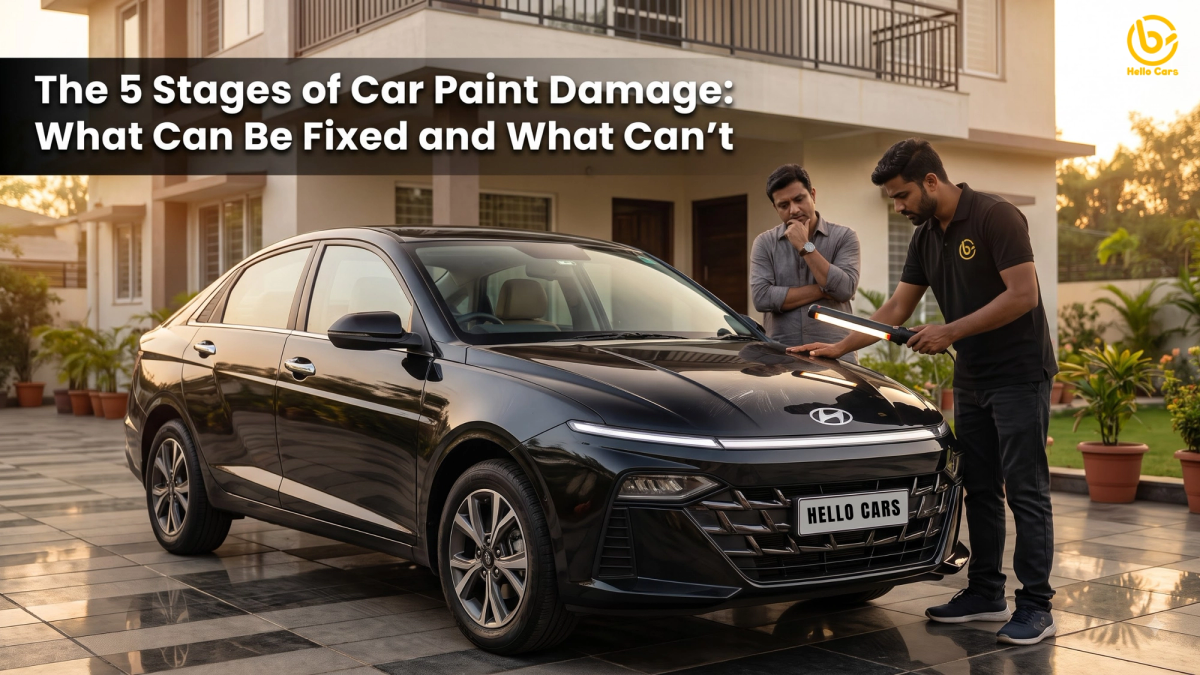
When you notice a scratch on your car, it's easy to assume the paint needs to be repaired or the entire panel needs to be repainted. But not every mark is serious enough to require that kind of work.
Car paint doesn't suddenly go from perfect to badly damaged. Most problems develop gradually. A little contamination here, a few fine scratches there, and eventually the surface starts looking dull or worn.
Understanding what stage your car's paint is in can help you figure out whether it simply needs a proper wash, professional polishing, or something more serious.
More importantly, catching the problem early can sometimes save you from an unnecessary and expensive repair.
Stage 1: Dust and Surface Contamination
The first stage isn't really paint damage at all.
Your paint may still be in perfectly good condition, but the surface has accumulated everything it comes into contact with during everyday driving. Dust, road grime, pollen, bird droppings, tree sap and water residue can all settle on the car.
At this point, the car may look dull simply because the paint is covered with contaminants. Run your hand across the bonnet and you may also notice that it doesn't feel as smooth as it did when the car was new.
A proper car wash can usually take care of most of this.
The important thing here is not to make the mistake of wiping the dirt away with a dry cloth. Dust can contain tiny abrasive particles, and dragging them across the paint can create fine scratches.
If the paint itself is still healthy, there is no reason to start polishing or repainting. Start with proper cleaning.
Stage 2: The Paint Starts Losing Its Shine
This is when you begin noticing that washing doesn't quite bring your car back to the way it used to look.
The car is clean, but the paint still looks slightly flat. Reflections aren't as sharp, and the colour doesn't seem as deep as it was when the vehicle was newer.
This can happen gradually because the paint is constantly exposed to sunlight, pollution, dust, rain and everyday use. Over time, the surface develops tiny imperfections that affect the way it reflects light.
At this stage, the paint may still be perfectly healthy underneath.
This is where professional polishing can make a noticeable difference. Rather than simply cleaning the surface, polishing works on the paint itself and helps improve its smoothness and clarity.
For many cars, this is the point where owners realise that the vehicle doesn't necessarily need repainting. It simply needs the surface brought back into better condition.
Stage 3: Swirl Marks and Fine Scratches Start Showing
If you've ever looked at your car under bright sunlight and suddenly noticed dozens of tiny circular scratches, you're probably looking at swirl marks.
They are especially easy to see on black and other dark-coloured cars.
These marks often develop from everyday washing habits. Wiping dust from a dry car, using an old cloth, washing with trapped dirt in a towel, or using poor washing techniques can gradually introduce fine scratches into the clear coat.
The frustrating part is that you may not notice them after every wash. They build up slowly.
Eventually, they begin affecting the overall appearance of the car. Even when the vehicle is clean, the paint can look hazy or less glossy because those tiny scratches scatter the reflected light.
This is where rubbing and polishing can help. Depending on the condition of the paint, professional surface correction can significantly reduce the appearance of fine scratches and swirl marks.
The earlier you address them, the easier it is to maintain the original finish.
Stage 4: The Scratch Goes Deeper
Not every scratch can be polished away.
At some point, the damage goes beyond what polishing can safely correct. One simple way to get an initial idea is to gently run your fingernail across the scratch.
If your nail catches noticeably, the scratch may be deeper than a typical surface mark.
You might also see a different colour inside the scratch. If the damage has gone through the clear coat and into the underlying paint or primer, polishing alone won't be able to put the missing material back.
Polishing may still improve how the area looks by reducing the surrounding dullness, but completely removing a deep scratch could require touch-up paint, spot repair or repainting, depending on the extent of the damage.
This is why it's better not to keep polishing the same area hoping a deep scratch will eventually disappear. There is only so much of the clear coat that can safely be corrected.
Stage 5: The Paint Itself Has Started Failing
The final stage is when the paint is no longer simply scratched or dull. The coating itself has started to deteriorate.
You may notice peeling, flaking, severe oxidation, or areas where the underlying surface is becoming visible.
At this point, polishing is not the answer.
Polishing can refine and correct an existing paint surface, but it cannot replace paint that has already failed or peeled away.
Depending on the condition of the panel, proper paint repair or repainting may be necessary.
This is also why ignoring serious paint damage for a long time isn't a good idea. Once the protective layers are compromised, the underlying material can become more vulnerable to moisture and environmental exposure.
Why Catching Paint Damage Early Matters
The difference between the first few stages and the later stages can be significant.
A car with surface contamination may only need a thorough wash. A car with dull paint or fine swirl marks may benefit from professional polishing. A car with deep scratches or failing paint may need actual paint repair.
The mistake many owners make is waiting until the damage becomes impossible to ignore.
By then, something that could have been managed with proper maintenance may have progressed into a more complicated repair.
Regular washing also plays a bigger role than people realise. Keeping contaminants off the paint reduces the amount of time they're sitting on the surface and gives you a chance to notice new problems before they become serious.
Does Every Scratch Need Polishing?
No.
If the scratch is extremely light and only affects surface contamination or residue, a proper wash may be enough.
If the paint has fine swirl marks, light scratches or oxidation, polishing may help restore the appearance.
But if the scratch has gone through the paint or the panel is already peeling or heavily damaged, polishing isn't going to solve the underlying problem.
The right solution depends on the depth and condition of the paint.
How Can You Tell If a Scratch Is Too Deep?
The fingernail test can give you a basic indication, but it isn't a perfect way to diagnose paint damage.
If your fingernail catches strongly on the scratch, or you can see primer or another layer underneath the paint, the damage is likely deeper than what polishing can completely correct.
For anything significant, it's better to have the surface inspected by someone experienced rather than repeatedly trying different products at home.
Can Washing Your Car Actually Cause Paint Damage?
Yes, but usually not because washing itself is harmful.
The problem is how the car is washed.
Using a dirty cloth, wiping a dusty surface without rinsing it first, using rough materials, or repeatedly dragging dirt across the paint can create fine scratches over time.
A proper wash should loosen and remove the dirt before you start rubbing the surface. Clean washing tools and proper drying techniques also matter.
In other words, keeping your car clean is good for the paint. Washing it carelessly can work against you.
How Do You Keep Your Car's Paint in Better Condition?
You don't need to treat your car like a showroom vehicle every day.
Simple habits can make a big difference. Wash the car regularly, rinse away loose dirt before wiping, use clean microfiber towels, avoid dry wiping, and remove bird droppings or tree sap as soon as you notice them.
If the paint starts looking dull or develops fine swirl marks, dealing with the problem early through professional polishing can help restore the finish before more serious damage develops.
And if you notice a deep scratch, peeling paint or exposed primer, don't assume polishing will fix it. That's the point where professional assessment is more useful.
Frequently Asked Questions
Can polishing remove all scratches?
No. Polishing is most effective for surface imperfections such as fine scratches, swirl marks and light oxidation. Deep scratches that have gone through the clear coat or paint usually need a different type of repair.
How do I know if my car needs polishing?
If your car is clean but still looks dull, hazy or covered in fine swirl marks, polishing may help improve the paint's appearance. A professional inspection can determine whether correction is appropriate.
Can a car wash remove scratches?
A car wash can remove dirt and contaminants, but it cannot repair scratches that are already in the paint. In fact, improper washing can create additional fine scratches.
Is it possible to fix deep scratches without repainting?
It depends on how deep the scratch is. Some deeper marks can be improved with spot repair or other correction methods, while scratches that reach the primer or metal may require repainting.
How often should I polish my car?
There isn't a fixed schedule that works for every vehicle. It depends on the condition of the paint, how the car is used, where it's parked and how it is washed and maintained. Polishing should be done when the paint actually needs correction rather than simply following a frequent schedule.
Final Thoughts
Not every mark on your car is a reason to panic.
A dusty surface is different from dull paint. Dull paint is different from swirl marks. Swirl marks are different from a deep scratch, and a deep scratch is very different from paint that is already peeling or failing.
Knowing the difference helps you choose the right solution.
Sometimes your car simply needs a proper wash. Sometimes the paint needs professional rubbing and polishing to bring back its gloss. And sometimes the damage has gone far enough that paint repair is the more appropriate option.
The important thing is to identify the problem before assuming the worst.
Your car's original paint is worth preserving, and in many cases, the earlier you look after it, the more of that original finish you can keep.